

Next.js vs React + Vite: Which Should You Choose in 2026?

"Should I use Next.js or just React with Vite?" It's one of the most common questions in modern frontend — and the honest answer is: it depends on what you're building. The two aren't quite the same kind of thing. Next.js is a full framework; React + Vite is a library paired with a fast build tool. This guide breaks down the real differences so you can choose with confidence.
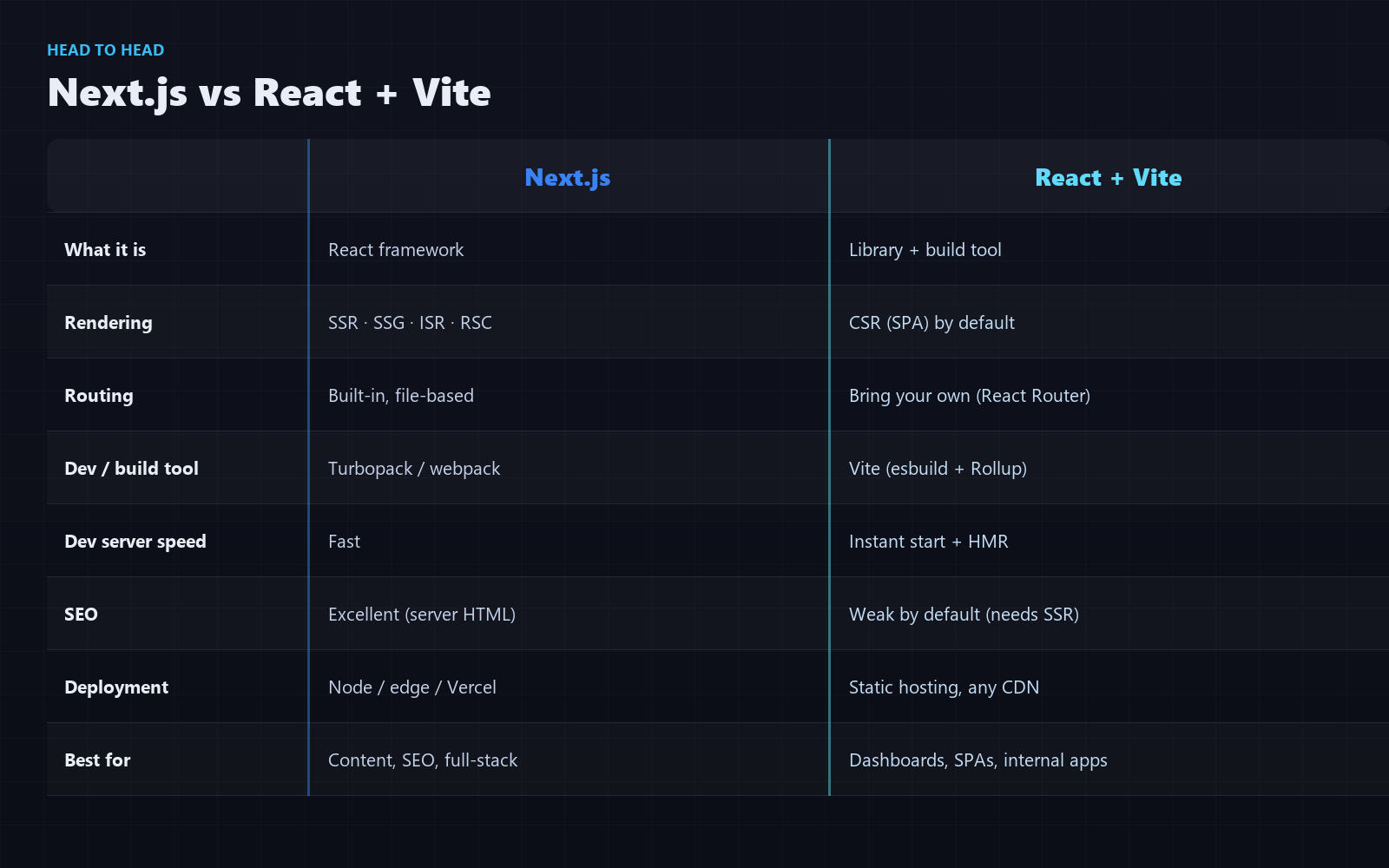
What Each One Actually Is
Next.js is a React framework. It gives you server-side rendering, static generation, React Server Components, file-based routing, API routes, image optimization, and a build system — all wired together with sensible defaults. It's opinionated and batteries-included.
React + Vite is React (the UI library) scaffolded with Vite (a lightning-fast dev server and build tool). Out of the box you get a client-side single-page app with an outstanding developer experience, and you assemble the rest — routing, data fetching, SSR if you need it — from the ecosystem.
The Biggest Difference: Rendering
Where your HTML is produced is the deciding factor for most projects.
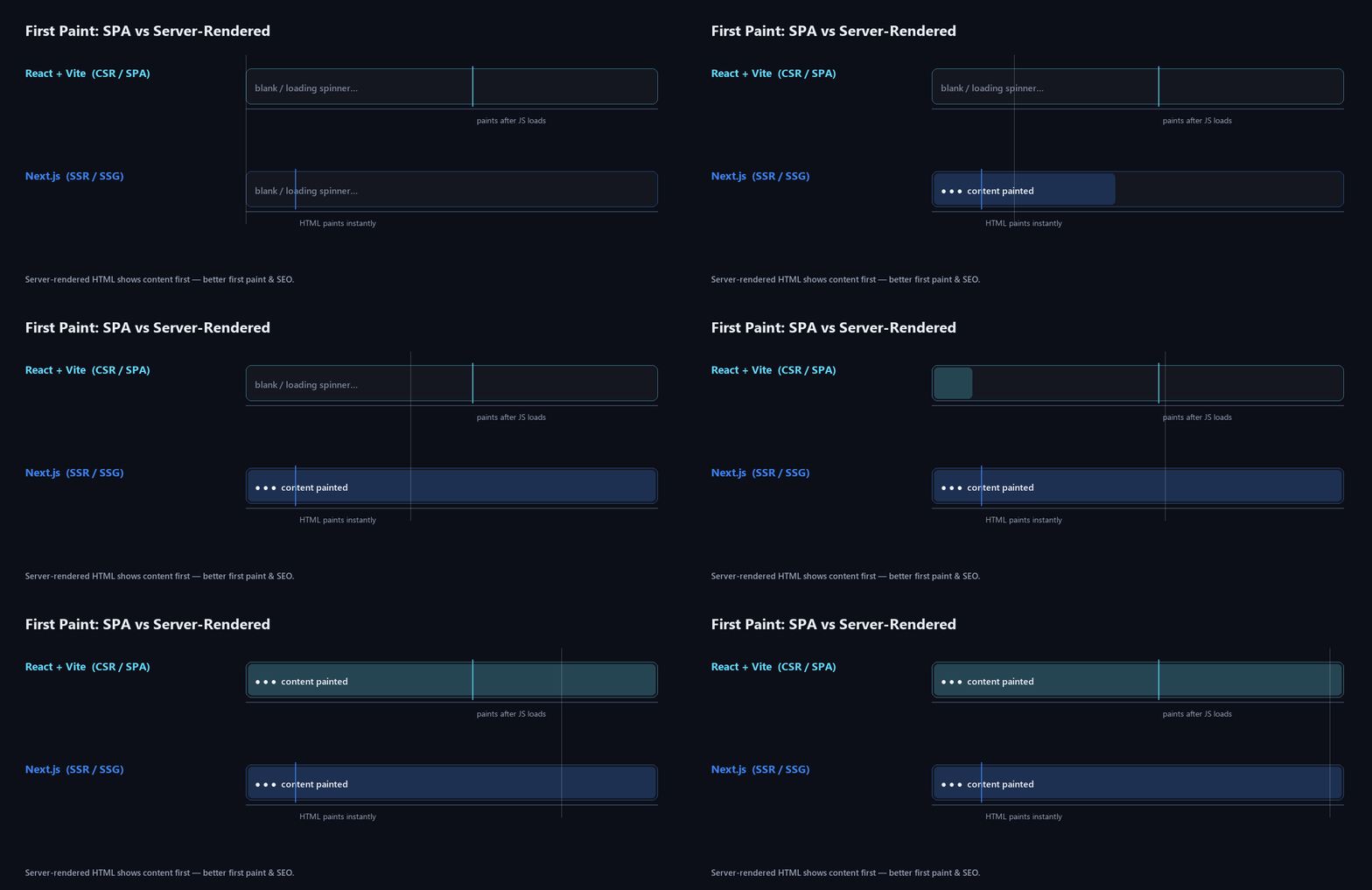
A plain React + Vite app renders on the client (CSR). The browser downloads a mostly-empty HTML shell, then JavaScript boots up and paints the page. It's fast on subsequent navigations, but the first paint waits on JS — and crawlers may see an empty page.
Next.js can render on the server — SSR, SSG, or with React Server Components — so the browser receives real HTML immediately. That's better for first paint, perceived speed, and SEO.
React + Vite — CSR by default; add SSR yourself if you need it.
Next.js — SSR, SSG, ISR, and RSC built in.
Developer Experience & Build Speed
Vite is famous for one thing: speed. It serves your source as native ES modules in development, so the dev server starts instantly and hot-module reload (HMR) is near-instant — no full rebuild on every save.
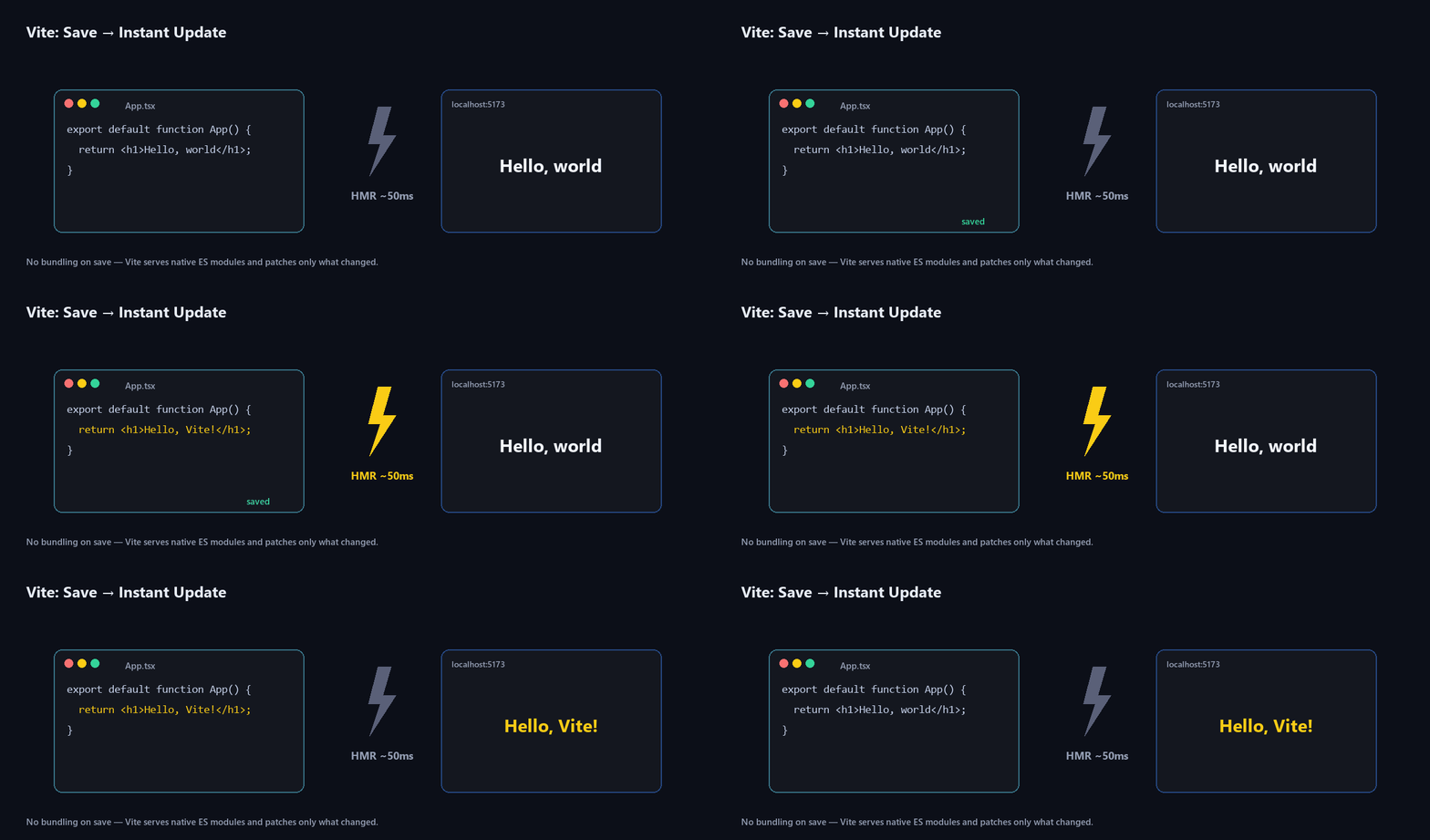
Next.js has closed much of the gap with Turbopack, and its dev experience is excellent, but for a pure SPA, Vite's cold-start and HMR are hard to beat. Vite uses esbuild in development and Rollup for production builds.
SEO & Performance
SEO — Next.js wins by default: server-rendered HTML means content is there for crawlers on the very first request. A React + Vite SPA needs prerendering or SSR to compete.
First paint — server-rendered pages show content sooner; SPAs trade a slower first paint for snappy client-side navigation afterward.
Bundle & control — a Vite SPA ships less framework overhead and gives you full control over what's included.
Routing, Data & Deployment
Routing — Next.js has file-based routing built in; React + Vite lets you pick (React Router is the common choice).
Data fetching — Next.js offers server components,
fetchwith caching, and server actions; with React + Vite you typically use client fetching plus something like TanStack Query.Deployment — a Next.js app usually wants a Node or edge runtime (Vercel makes this trivial); a React + Vite SPA is just static files you can host on any CDN.
So, Which Should You Choose?

Here's the rule of thumb:
Choose Next.js when SEO and content matter — marketing sites, blogs, e-commerce, documentation — or when you want an opinionated, full-stack React setup.
Choose React + Vite for app-like experiences behind a login — dashboards, admin panels, internal tools — where SEO doesn't matter and you want maximum dev speed and flexibility.
Frameworks trade flexibility for defaults. Pick Next.js when the defaults save you time; pick React + Vite when you want to make the calls yourself.
Final Thoughts
There's no universal winner — only the right tool for the job. Next.js gives you rendering power and SEO out of the box; React + Vite gives you a blazing-fast, minimal SPA you assemble your own way. Match the tool to the product, and either one can ship something great.
At CodeChoicez, we build with both — choosing per project based on your goals, audience, and performance needs. Planning a new web app and not sure which way to go? let's talk.