

VanillaSlice: Vertical Slice Architecture for .NET, Feature by Feature

If you've built a few .NET applications, you know the drill: to add one feature you touch a controller in one folder, a service in another, a repository somewhere else, and a DTO in a fourth. Your code is organized by technical layer, but you think and ship in features. Vertical slice architecture flips that around — and VanillaSlice is a tool that generates it for you.
VanillaSlice is a zero-dependency .NET code generator whose whole philosophy is "code that generates code — then gets out of your way." It scaffolds a complete, wired solution built around vertical slices, hands you plain C# you own outright, and then disappears: no runtime SDK, no vendor lock-in, MIT licensed. Let's unpack what that means.
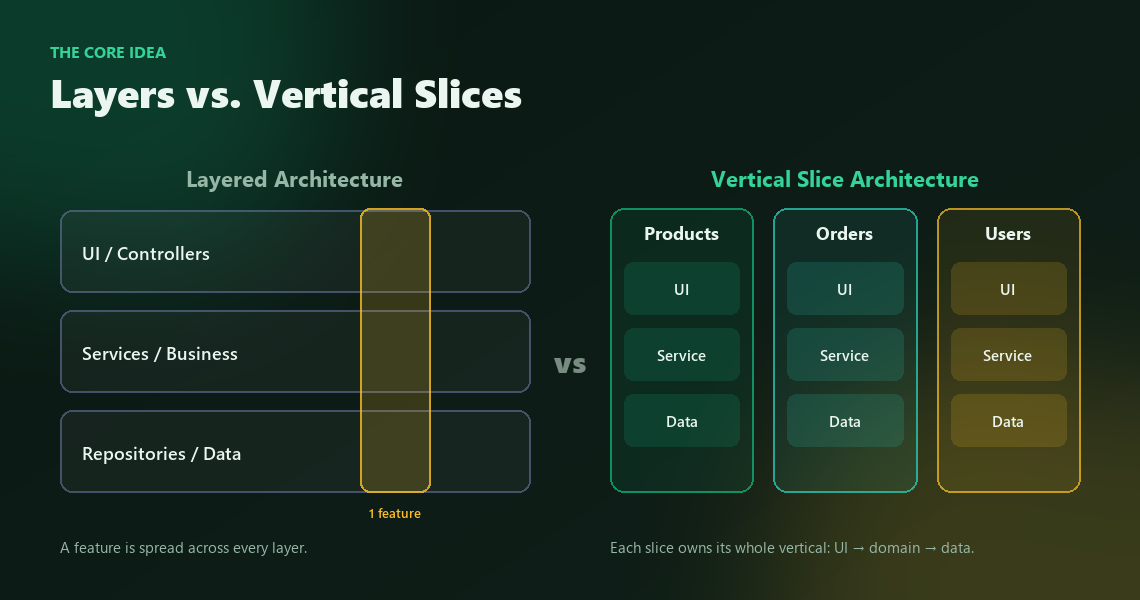
The Problem With Layer-First Architecture
Traditional layered — and even Clean — architecture organizes code by responsibility: all controllers together, all services together, all repositories together. It looks tidy on a diagram, but day to day it means a single feature is smeared across every layer. To change "Product Listing," you open five folders and keep four of them in your head at once.
Features are scattered — related code lives far apart.
Changes ripple — a tweak in one layer can cascade through others.
Onboarding is slow — new devs must learn the whole layer cake before shipping anything.
Vertical Slice Architecture: Organize by Feature
Vertical slice architecture organizes code by feature (use case) instead of technical layer. Each slice contains everything needed to fulfil one request — from the UI down to the database — and stays independent and self-contained.
In VanillaSlice, as the project puts it, each slice owns its whole vertical: UI → contract → domain → data. A single feature folder holds its Razor/XAML component, its view model, its typed HTTP client, its API controller, and its service:
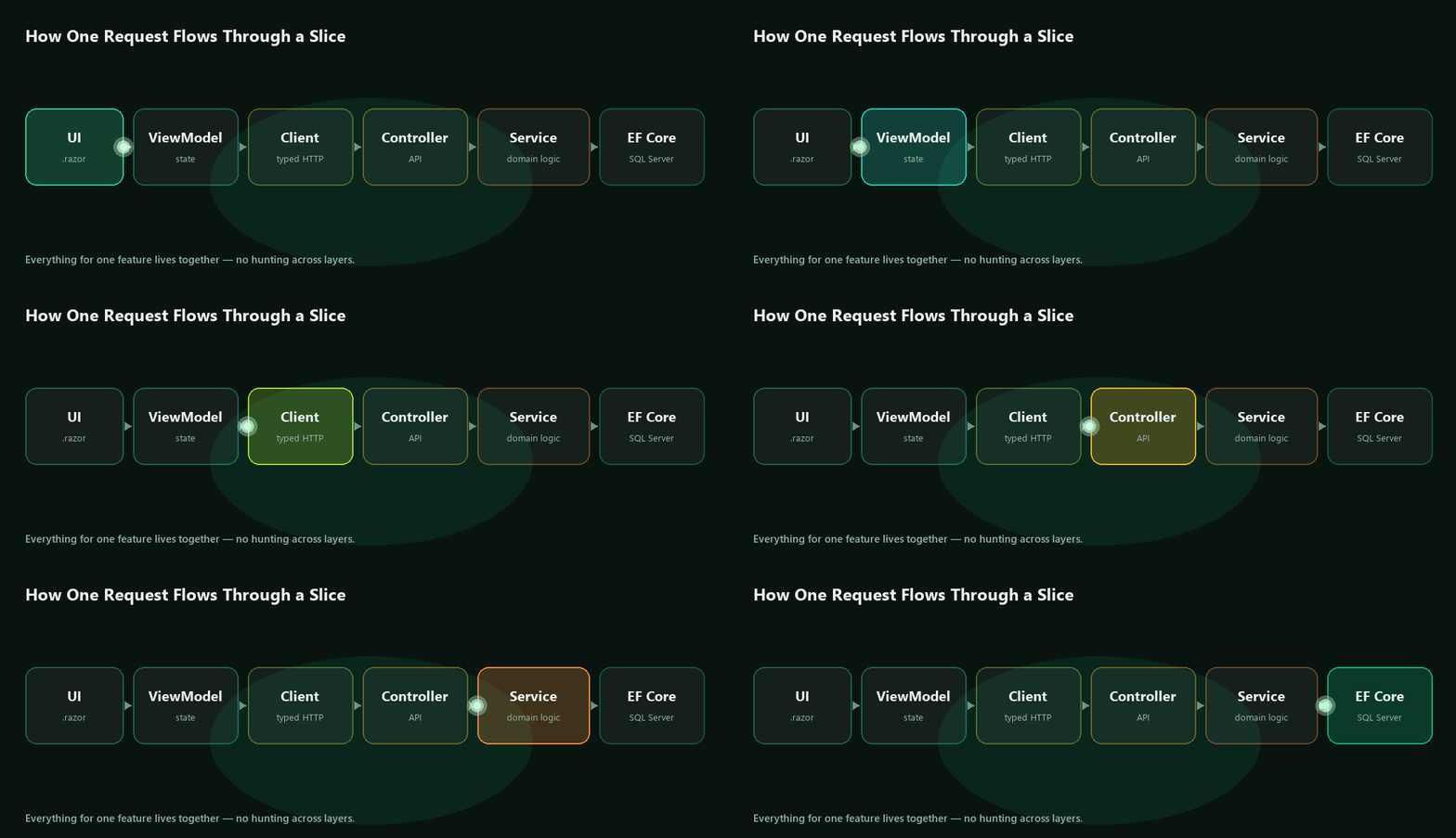
For a "Product Listing" feature, that's:
ProductListing.razor— the UI component.ProductListingViewModel.cs— state management.ProductListingClient.cs— a typed HTTP client.ProductListingController.cs— the API endpoint.ProductListingService.cs— domain logic and EF Core queries.
Everything for one feature lives together. Add a feature, delete a feature, or hand one to a teammate — nothing else needs to move.
What VanillaSlice Actually Generates
VanillaSlice isn't a framework you depend on at runtime; it's a generator. You use a browser-based wizard, and it emits a complete solution — projects, dependency injection, routing, endpoints, and sample CRUD slices — all in standalone C#.
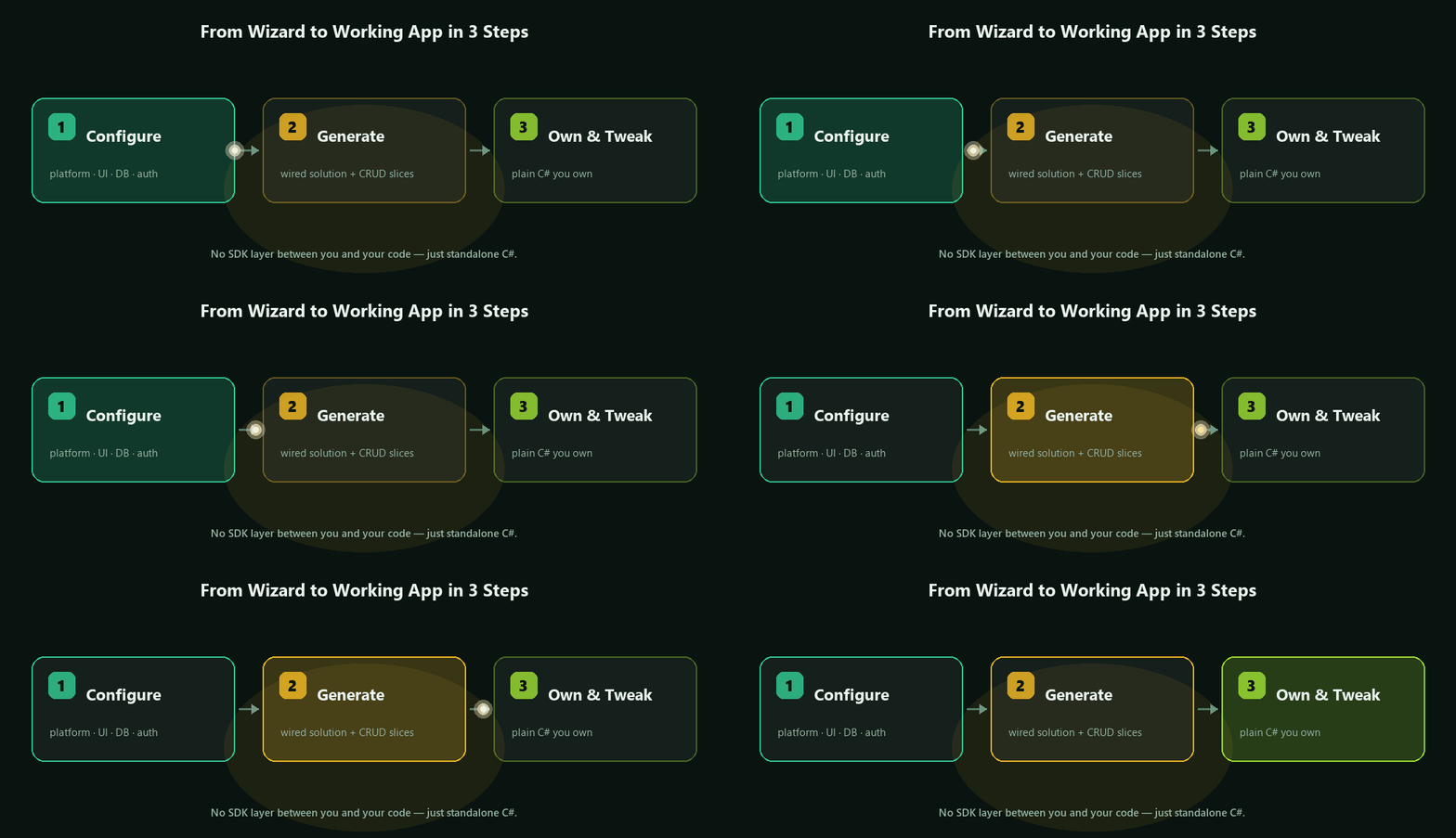
Configure — pick your platform, UI framework, database, and authentication in the wizard.
Generate — get a fully wired solution with DI, routing, endpoints, and working sample slices.
Own & Tweak — edit plain C# directly. There's no SDK layer between you and your implementation.
Adding new features later is just as fast — a built-in SliceFactory scaffolds a fresh slice in seconds, with interfaces and safe stubs already in place.
The Principles Underneath
SOLID by design — the factory enforces structure through interfaces and safe stubs, so dependency inversion and single responsibility happen automatically.
No repository pattern — VanillaSlice skips the repository ceremony and uses clean, composable EF Core queries directly in services.
Self-contained features — each slice is independent, testable, and safely modifiable without cascading changes.
Zero dependencies — the generated code has no runtime dependency on VanillaSlice. It's yours, fully standalone.
Open and free — MIT licensed, 100% open source, commercial use allowed, no telemetry, no "pro tier."
Batteries Included: The Stack
VanillaSlice targets the modern .NET stack out of the box:
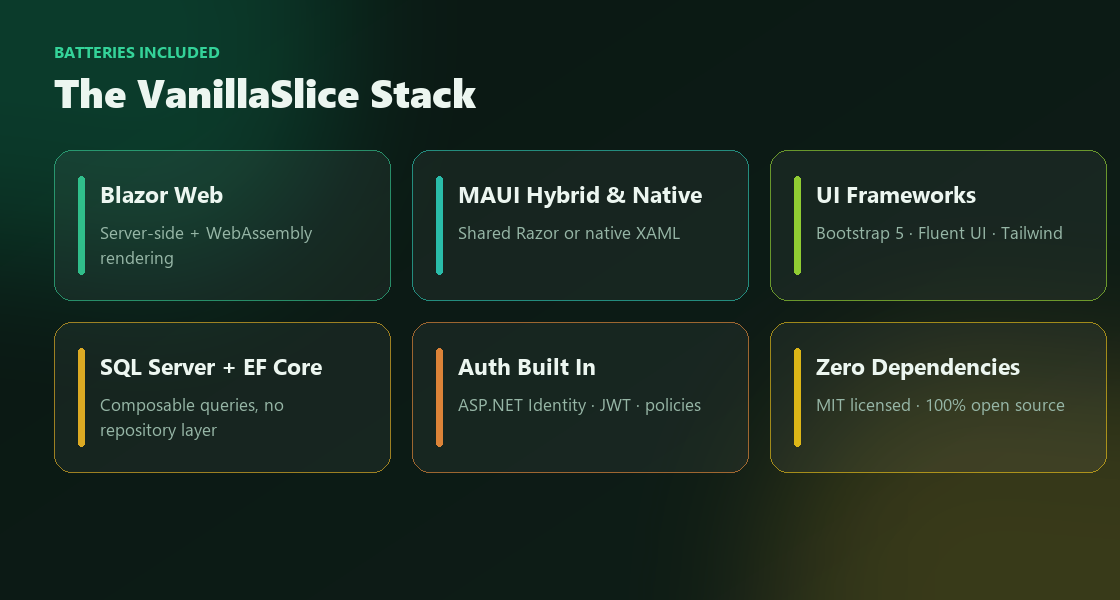
Platforms — Blazor Web (server-side and WebAssembly), MAUI Hybrid (shared Razor), and MAUI Native (XAML with shared backend slices).
UI — Bootstrap 5, Microsoft Fluent UI, or Tailwind CSS.
Data — SQL Server with Entity Framework Core.
Auth — ASP.NET Core Identity, JWT tokens, and authorization policies.
When Should You Reach for It?
Vertical slices shine when you're building feature-rich apps that will evolve over years — line-of-business apps, SaaS products, internal tools. If you value shipping features fast, keeping regressions local, and onboarding developers quickly, feature-first organization pays off. And because VanillaSlice generates code you own, you're never betting your codebase on someone else's runtime.
The best architecture is the one your team can change without fear. Vertical slices keep change local; VanillaSlice gives you a running head start.
Final Thoughts
Vertical slice architecture isn't new, but VanillaSlice makes it approachable: configure, generate, and start shipping features instead of wiring plumbing. You get a clean, feature-first .NET solution — Blazor or MAUI — with zero runtime dependencies and full source ownership.
At CodeChoicez, we design .NET architectures that stay maintainable as products grow. If you're weighing vertical slices, Clean Architecture, or a hybrid for your next build, let's talk.